AUDIOBOOK REVIEWS
Showing posts sorted by date for query I Claudius. Sort by relevance Show all posts

Wednesday, June 6, 2012

JIAM2012 Photo: 06


Last night, in NYC the official APA Audie Awards were meted out and, a dozen Armchair Audies participants vicariously experienced the thrill by following the action via twitter. I had printed out the Armchair Audies ballot so I could follow along. There were two trains of thought running through my mind as the evening progressed: The first was in comparing the Armchair Audies picks against the APA judges' picks and; keeping track of Blackstone Audio's nominations. 

When the Audio Drama category was called, I really expected The Mark of Zorro to win; but when I, Claudius was announced, I wasn't surprised. I myself deliberated between The Mark of Zorro and I, Claudius and flip-flopped on my final decision many times! They are both truly excellent productions and, as I noted on my ballot, there is certainly no shame in losing to the BBC Radio 4 presentation (AudioGo.) I highly recommend both productions and am sincerely happy for AudioGo  :-)

Blackstone had been nominated for a total of twelve Audies and, as categories were called and the awards went to other audiobook companies, hope lingered until the final Big 5 categories: Best Narration by Author or Authors, Best Solo Narration - Female, Best Solo Narration - Male; Best Achievement in Production and, Audiobook of the Year. In the Big 5, we only had one nomination (The Mark of Zorro) in the Best Achievement in Production, so that meant we were not going to be coming home with our usual three of four. And we didn't win this one either. That's right, Blackstone was zero for twelve! 

But Blackstone did garner one extraordinary distinction: The Special Achievement Award was given to Craig Black, the founder and owner of Blackstone Audio, Inc. Apparently, he got up, thanked his family, staff, some narrators, and then proceeded to have a poignant moment in remembering the late Yuri Rasovsky (audio dramatist who adapted Johnston McCulley's The Mark of Zorro and directed the production as well.) So, in the end, no one at Blackstone was terribly upset about not having won any title awards; but rather very pleased to have been recognized within the industry that they helped build.

And yes, I am happy they are not unhappy because that means I still have a job [knock on wood] :-)


Monday, May 28, 2012

Armchair Audies: Audio Drama


When I first signed onto the Armchair Audies, I hadn't intended to judge a specific category! I had originally intended just to ameliorate my position as a Bad Employee/Bad Wife. I ended up listening to all five finalists in the Audio Drama category; plus one in the Thriller/Suspense category (Unknown, a.k.a. Out of My Head by Didier can Cauwelaert; narrated by Bronson Pinchot) and one in the Original Works category (The New Adventures of Mickey Spillane's Mike Hammer, Vol. 3: Encore for Murder by Mickey Spillane and Max Alan Collins; performed by a full cast starring Stacy Keach.) Before the Armchair Audies began, I had already listened to The Thank You Economy (written and narrated by Gary Vaynerchuk ) - in the Business/Educational category and, Go the F*ck to Sleep (by Adam Mansbach; narrated by Samuel L. Jackson) - in the Humor category. This brings the total of finalists that I listened-to to nine and; the fact that I'm only a slightly better employee for having listened to five out of the twelve Blackstone Audio, Inc.-produced titles and; still a bad wife since I didn't listen to any of the audiobook finalists that DH narrated :-/

Without further ado, my picks in win-place-show-the rest order!
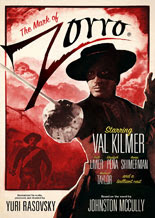

The Mark of Zorro
based on the novel by Johnston McCulley
dramatized by Yuri Rasovsky
studio performance by a full cast starring Val Kilmer
and featuring Ruth Livier, Elizabeth Peña, Armin Shimerman and Meshach Taylor
3.1 hours

I'm going to admit that I had reservations heading into this audio. My past listening experiences to audio dramas had not been great: a lot of sound effects, hammy acting and poor editing made me wary; but this audio was slickly produced and a lot of Fun! It is the audio that actually has engendered a real interest in audio drama for me, now that I can see all that it can really be! I was really torn between The Mark of Zorro and I, Claudius as to which to pick for the Best slot; but when The Mark of Zorro was also nominated for Best Achievement in Production, that tipped the scales in its favor. 


+ Excellent Production Values (nominated for Best Achievement in Production)
+ Lighthearted and engaging story
+ One of the late Yuri Rasovsky's last productions
+ Val Kilmer
+ FUN
- There was one sound effect, a musical underscoring phrase that didn't seem right (see my review by clicking on the title link above)


I, Claudius
based on the novel by Robert Graves
A BBC Radio 4 full cast production starring Tom Goodman Hill as Claudius and, Derek Jacobi as Augustus
Ⓟ 2011, AudioGo, Ltd
5.8 hours (12 episodes @ ≈30 minutes each)

I loved this audio drama too! Robert Graves' historical fiction is brought to glorious life with strong performances and the technical and artistic expertise of BBC Radio 4. The production quality of the performances are "edge-to-edge," meaning that the first and last moments of the listening experience are equally good: There isn't a soft start or slagging off in the middle or the end. As for the story itself,  Roman politics makes modern politics look like a children's spat on the playground! It's a great "vicarious" experience of ancient Roman life and Robert Graves' novel.


+ Excellent production values (BBC has production skillz)
+ Thoroughly engaging story
+ Derek Jacobi and Tom Goodman Hill
- Felt like I had been slightly cheated with a bit of a bait-and-switch: Derek Jacobi played Augustus, not Claudius (see my review my clicking on the title link above)
- Instead of being presented as a seamless story, the episodes were broken up with intro- and outro- credits as originally produced. Every set of credits beyond the first and last interrupted the listening experience.


We're Alive: A Story of Survival, The First Season  
created by Shane Salk and Kc Wayland; written by Kc Wayland
12 podcasts  performed by a full cast
10.30 hours


For the zombies fans out there, this is pretty epic! It's a compilation of a very popular podcast program featuring a group of survivors in Southern California. It's loaded with "testosterone grade sound effects," interesting predicaments and some strong performances. The script carries real-life survival considerations and the characters are well-defined. The strength of the performances evolve as the actors settle into their roles (see my review by clicking the title link.)


+ Interesting story that will leave you on the hook for The Second Season
+ "Testosterone Grade Sound Effects" appropriate to the tenor of the story
- "Soft start" until the production settles into its groove.
- Not everyone is a fan of "testosterone grade sound effects" - Also, there was a bit where you actually find yourself listening to two people eat a candy bar :-/


"The Graduate"
based on the novel by Charles Webb and;
the screenplay by Calder Willingham and Buck Henry
dramatized by Terry Johnson
live stage reading performed by a full cast starring Kathleen Turner and Matthew Rhys
1.65 hours


I had no expectations of the audio whatsoever as I had not read the novel upon which it was based, seen the play or even seen the iconic movie! It turned out to be funnier and perhaps more poignant than I thought it would be. Kathleen Turner was so perfect as Ms Robinson and I really wished I could have seen a live performance in NY. For this recording, which was a live stage reading (not an actual full play performance) I wasn't crazy about the montage of dialogue and sound effects as it removed the listener from the intimacy of the experience. Also, the audience's reaction anticipated what the listener could divine which was a bit disconcerting (see my review by clicking the title link.)


+ Funny, quotable lines
+ Kathleen Turner and Matthew Rhys
+ Dated script
- Sound effects (montage)
- Audience anticipation


The Arthur Miller Collection
by Arthur Miller
performed by various full casts
Ⓟ 2011, L.A. Theatre Works
18.60 hours


This is such an important collection to have! While many may be familiar with some of Arthur Miller's more famous plays, chances are you haven't seen or heard many that are featured in this collection. And too, with theatre no longer a prominent feature in our cultural lives, the chances are diminishing that you will see any but the more famous performed. There are ten plays presented, all from different companies of players. However, the different production qualities inherent in gathering performances from different sources makes for an overall uneven audio offering. The disparity of performance and production qualities probably wouldn't be noticeable if you didn't listen to all the plays back-to-back though; and moreover, Miller is so depressing that you may not want to do that any way :-/


+  Important works
+ Many of the plays are performed by seasoned actors and stars 
- Arthur Miller is depressing as hell
- Uneven production and performance values


One of the tings that I learned about Audio Drama overall is that the term covers quite a bit of different types of production: studio, radio, podcasts and live stage readings! In some ways, it was like comparing apples and oranges, so I had to judge the finalists as to how well they met my expectations as an audiobook offering overall. Production quality and performances were considered on parity with the story itself. It will be interesting to see how my picks stack up against the actual winners!


Tuesday, May 22, 2012

We're Alive: A Story of Survival, The First Season


We're Alive: A Story of Survival, The First Season  
created by Shane Salk and Kc Wayland; written by Kc Wayland
12 podcasts  performed by a full cast
10.30 hours


Michael, Angel and Saul are three soldiers in present day Northern California ordered to report for duty: to restore order to their beleaguered city which is ravaged by "zombies." The infected are necrotic bodies that can only be truly taken down by fire or beheading and, the transmutation of the corporeal states is triggered via a bite from one of the infected.

We're Alive: A Story of Survival, The First Season is a collection of twelve podcasts that details the story of Michael, Angel and Saul as they make their way through  the new landscape where the infrastructure is crumbling and other survivors are recovered. The survivors hold a position in an abandoned apartment building, referred to amongst themselves as "The Tower." Here, the military triumvirate fight to provide food, clothing and shelter as well as security against the zombies and "Mallers." The Mallers are the convicts from a local prison who  have holed up at a local mall and who pose a threat with their unchecked violence and ambitions to seize the Tower.  The Tower residents and the Mallers are the antithesis of the other, representing civilization and anarchy respectively.

The production quality of We're Alive: A Story of Survival, The First Season is very much in the tradition of foley inspired radio drama. Sue Zizza of Sue Media Productions, once coined the phrase "testosterone grade sound effects" when describing the heavy usage of sound effects like guns, squealing tires, etc. in an audio drama and, in the case of We're Alive: A Story of Survival, The First Season, the description is apt. This is not to say that the "testosterone grade sound effects" aren't appropriate; only that subtlety is not in play. The sound effects take an almost equal place in the sound track as the characters' lines, as opposed to underscoring or used in service to the action or dialogue.


Jim Gleason, Shane Salk and Nate Geez, as Michael, Angel and Saul respectively are noteworthy in voicing their roles convincingly, naturally and without getting into excessive hyperbole. However, the pulp tenor of the story lent itself to a temptation that many of the other performers could not resist: to drop into over-characterization or stereotyping. Mostly, this works to keeps the characters distinct; but occasionally, a performer's choices didn't work out quite as well as might have been expected: Claire Dodin plays Riley, a French restauranteur/survivor/Tower resident. Ms Dodin seems to have had a little trouble settling into a French accent, which seemed to have come by way of  Britain and Asia; all of which left the character of Riley as something of a enigma until the story spelled it out as to who she was and where she came from. Datu, a Filipino who worked as the apartment building's maintenance supervisor before becoming the Tower's engineer, sounded more like Apu from The Simpsons than he did a native from the Philippines. There was no question as to who was speaking when any of the performers rendered their lines; it was just a bit jarring when a performer didn't really seem to be "in character."

There is plenty of action, adventure, and "testosterone grade sound effects" to galvanize the listener to the story: There are no guarantees as to who will survive and what will happen next and the unexpected twists in We're Alive: A Story of Survival, The First Season will keep you on the hook for Season Two.  

05/24/2012 - Correction: Strikethrough of the word "Northern" in the first line. Bell, CA is a town in Southern California. 

See Also:


Other Stuff:
We're Alive: A Story of Survival - The First Season (created by Shane Salk and Kc Wayland; written by Kc Wayland; performed by a full cast) qualifies for:


I borrowed a LIbrary CD edition of We're Alive: A Story of Survival - The First Season (created by Shane Salk and Kc Wayland; written by Kc Wayland; performed by a full cast) from Blackstone Audio, Inc. I had no involvement in the production of We're Alive: A Story of Survival - The First Season (created by Shane Salk and Kc Wayland; written by Kc Wayland; performed by a full cast.) I receive no monies, goods or services in exchange for reviewing the product and/or mentioning any of the persons or companies that are or may be implied in this post.

Thursday, May 10, 2012

The Crucible


The Crucible
by Arthur Miller
performed by Irene Aranga, Rene Auberjonois, Ed Begley, Jr., Bud Cort, Richard Dreyfuss, Judyann Elder, Hector Elizondo, Fionnula Flanagan, Ann Hearn, Carol Kane, Stacy Keach, Joe Spano, Michael York, and others

John Proctor must defend both his wife and himself against the charges of witchcraft that a a former lover of his has instigated against them. Abigail Williams, a spiteful seventeen-year-old who initially accuses Elizabeth Proctor of witchcraft may have done so to get Goody Proctor out of the way and assume the Goody Proctor's place; or she may have leveled the charge as an act of revenge against John Proctor for discontinuing their affair. Whatever the cause, Abigail Williams has only to act convincingly for a community of superstitious and gullible people for the charge to gain credibility. John Proctor, in his attempts to save his wife, gets caught up in the same vortex of ignorance and irrational beliefs and ends up having to decide between honor before God and honor amongst men. The time and setting is Salem, MA in the late 17th century - a time devoid of forensic science and a time when conviction carried the weight of evidence. The Salem Witch Trials became infamous in their unswerving and dogmatic approach that blinded the justice system to the truth.

This classic play of Arthur Miller's was written in response to the McCarthyism that held the Senate and the public in its thrall in the 1950s. Fears of Communism had reached fever pitch and no one was above suspicion. Many were accused with no more than a naming from a "witness"  and as a result, many lives and reputations were destroyed as common sense was routed out in favor of unsubstantiated claims. Overall themes of the father-son relationships and legacy, of the American Dream, of the Greek sense of tragedy that are explored in many of Miller's plays are largely missing in The Crucible owing to the play's very specific intention of being a didactic tool to show the public the insanity of McCarthyism.

The star-studded cast of veteran stage actors promises extraordinary performances and they deliver. This was originally a BBC Radio production recorded in Culver City, CA and the directorial expertise that BBC Radio brings to audio drama is not to be denied. Each role is given its due, creating a dynamic tension. The emotive interpretations, ranging from whispers to screams, generate uneasiness as the tragedy unfolds. There are, however, instances when dialogue is difficult to discern. Uneven sound levels and low registers/frequencies make certain nuances of the play hard to pick out if the listener is not on headsets.


See Also:
The Armchair Audies (Official Page)
The Mark of Zorro (Audiobook Review)
The Graduate (Audiobook Review)
I, Claudius (Audiobook Review)

The Man Who Had All the Luck (Audiobook Review)
All My Sons (Audiobook Review)
Death of a Salesman (Audiobook Review)


Other Stuff: I purchased a library CD edition of The Arthur Miller Collection (by Arthur Miller; performed by various full casts) from PaperbackShopUS via the Amazon Marketplace. The Crucible is the fourth play in the collection and is available for individual digital dnload. I receive no monies, goods or services in exchange for reviewing the product and/or mentioning any of the persons or companies that are or may be implied in this post.


Tuesday, May 8, 2012

Death of a Salesman


Death of a Salesman
by Arthur Miller
live stage reading performed by Steven Culp, Maureen Flannigan, Jason Henning, Jane Kaczmarck, Stacy Keach, Sam McMurray, Kathryn Meisle, Tim Morrison, John Sloan, Kate Steele, and Kenneth Williams
2.2 hours

Death of a Salesman is about Willy Loman, a traveling salesman who has worked hard all his life to create a legacy of greatness for his sons to emulate and build upon. This greatness rests not so much on education or cultivated intelligence, but upon a man's innate charisma which Willy believes can be parlayed into networking skills and a successful career (which in turn is measured by who you know.) However, neither of Willy's sons have lived up to his expectations and so the foundation upon which Willy has built his legacy bears examination. The inspection reveals cracks in Willy's ethics and is the substance of this American Tragedy. The idea of a father's legacy to his sons, more specifically the idea of the father doing his best to do what is best for his sons, was introduced in the interview with Michael Hackett, the director of The Man Who Had All the Luck and is a dominant theme in Death of a Salesman.

Whatever the original concept of Willy Loman's physicality was when Death of a Salesman was first written, the image has been "owned" by Lee J. Cobb since Cobb played Loman in the film adaptation in 1966. Since then, audiences expect a bear of a man, a brutish, forceful man to play the role; and if a director chooses to cast against the Cobb-type, criticism is sure to follow. In this regard, Stacy Keach does not disappoint. He is what the audiences want: a mans whose volume in voice is a measure of his will. Neither Keach or Jane Kaczmarck (as Linda Loman) are the most transparent of performers: Listeners will hear both of the actors before they hear the characters; but both actors deliver what the audience wants: assertive and emphatic performances.


See Also:
The Armchair Audies (Official Page)
The Mark of Zorro (Audiobook Review)
The Graduate (Audiobook Review)
I, Claudius (Audiobook Review)
The Man Who Had All the Luck (Audiobook Review)
All My Sons (Audiobook Review)


Other Stuff: I purchased a library CD edition of The Arthur Miller Collection (by Arthur Miller; performed by various full casts) from PaperbackShopUS via the Amazon Marketplace. Death of a Salesman is the third play in the collection and is available for individual purchase in CD edition. I receive no monies, goods or services in exchange for reviewing the product and/or mentioning any of the persons or companies that are or may be implied in this post.

Thursday, April 26, 2012

All My Sons


All My Sons
by Arthur Miller
performed by James Farentino, Ayre Gross, Julie Harris, Mitchell Hebert, Naomi Jacobson, Barbara Klein, Paul Morella, Michaeleen O'Neil, Nathan Taylor and Jerry Whiddon
directed by Nick Olcott
1.75 hours


Larry Keller is a WWII pilot has been MIA for a few years. What remains are the ingredients for an American  Tragedy: Larry's mother who refuses to believe that her son is dead; Larry's father, Joe Keller, who was accused, but eventually cleared of wrongdoing for the crime of manufacturing and distributing faulty airplane parts during the war;  Chris Keller, who lives in the shadow of his brother; Steve Deever, Joe's business partner who is serving time for the crime Joe was exonerated for; George Deever, Steve's son and; Ann Deever, Steve's daughter (and George's sister,) Larry's childhood sweetheart and, Chris' current love interest. 

A tree planted as a memorial or beacon for Larry is struck down in a storm and this triggers a cascade of confrontations in the household that careens towards an ugly truth  - a denouement born of grief, sorrow, anger and, resentment. Pathos and angst are wrung out of each scene until there is nothing left but the inevitable razing of individual hopes and a shocking conclusion worthy of a Classic Greek Tragedy.

All My Sons can be a painful play to bear witness to: Souls are laid bare as characters demand to be respected for their principles and motivations, for the persons they are; but are refuted by those closest to them and for whom their ethos has been hewn. Each characters makes a sacrificial offering of their suffering to another, only to be rejected and driven into a psychological corner. But for these same reasons, All My Sons is an important play to experience as well as it exposes the integrity of the foundations of the American Dream. The drive to achieve a manifest destiny is lacerated by the frailties of being human.

Though it is an important play, this particular presentation may not be the best performance. Instead of layering interpretative meaning into the dialog, the lines and monologues are uniformly delivered at a high intensity of rage and bitterness. This is not a play rendered with subtlety or nuance, a point underscored when George arrives at the Keller household for a confrontation. There are accusations and yelling; but all of the sudden George is happy to be back; and then equally as sudden, he's back to being enraged. By not providing emotional room for the characters, by constricting the characters to a monotonous fervor, George has no where to go except to appear as momentarily insensible. It is a delicate scene and a challenge for any director; but this ham-fisted approach robs the scene, and one cannot help but suspect the whole play, of its required elegance.


See Also:
The Armchair Audies (Official Page)
The Mark of Zorro (Audiobook Review)
The Graduate (Audiobook Review)
I, Claudius (Audiobook Review)
The Man Who Had All the Luck (Audiobook Review)


Other Stuff: I purchased a library CD edition of The Arthur Miller Collection (by Arthur Miller; performed by various full casts) from PaperbackShopUS via the Amazon Marketplace. All My Sons is the second play in the collection and is available for individual digital dnload. I receive no monies, goods or services in exchange for reviewing the product and/or mentioning any of the persons or companies that are or may be implied in this post.


Tuesday, April 24, 2012

The Man Who Had All the Luck

The Man Who Had All the Luck
by Arthur Miller
live staged reading performed by Emily Bergl, Kevin Chamberlain, Tim DeKay, James Gammon, Lee Garlington, Graham Hamilton,Tom McGowan, Kurtwood Smith, Russell Soder and Tegan West
directed by Michael Hackett
2.60 hours


Dave Beeves is a lucky man: his childhood sweetheart is now his bride; his auto repair shop is a success owing to an experienced mechanic walking into his shop at exactly the right time; he has a happy, healthy son and; he has just started out on a new venture in setting up a mink farm. But, as he is witness to everyday, not everybody has their dreams come true, despite their hard work and efforts; and even more bizarrely, their bad luck seems to be the currency of his own good fortune. Surely, this karmic debt will need to be paid, right? As Dave continues to gamble with his luck as his ante and, his family, friends and money as his collateral, there is excruciating tension as he "lets it all ride" on a major investment.

The Man Who Had All the Luck takes place in prewar America, at the edge of The Depression which made of mockery of the hard work ethic and, aggrandized "luck" as the only star of destiny/harbinger of fate that a man could comprehend. This is a subtle but constant theme which runs through many of Miller's works: The unfairness of life.

There is an interview with the director included with the audio in which Michael Hackett expounds on the major themes of Miller's plays, many of which are set forth in this early work, including but not limited to the rhetorical style, the Greek chorus element and, the father-son relationship. While the interview is interesting and educational, it creates an overall didactic feel to the play as a whole (versus a visceral experience) and, for the Miller novice, may qualify the experience as well. When looking at parsing out the play's structure and meaning, there is a tendency to only refer back to what the director has highlighted and, intellectualize the drama.

The performances were all fairly even, though not particularly remarkable. This play is not often performed however, so there is no large legacy of interpretation to either inherit or fight through, and overall it is a solid presentation.


Convo Starter:
About ten years ago a friend of mine found a wallet in a phone booth. Inside the wallet was $300. My friend contacted the person whose ID was in the wallet and returned the wallet to the owner. She said it was a matter of "good karma." I pointed out that she, my friend, also needed the money; so how did she know that the money hadn't been a karmic gift to her? Had she messed with her karma by giving the money back and throwing the universal balance out of whack? I admit that I would have taken the money. Many things in my life have been outright stolen from me and I would have seen the money has a partial payment to redress the balance; that it might have even be construed as the universe's gift to me in my hour of need. What would you have done?


See Also:
The Armchair Audies (Official Page)
The Mark of Zorro (Audiobook Review)
The Graduate (Audiobook Review)
I, Claudius (Audiobook Review)


Other Stuff: I purchased a library CD edition of The Arthur Miller Collection (by Arthur Miller; performed by various full casts) from PaperbackShopUS via the Amazon Marketplace. The Man Who Had All the Luck is the first play in the collection and is available for individual digital dnload. I receive no monies, goods or services in exchange for reviewing the product and/or mentioning any of the persons or companies that are or may be implied in this post.

Thursday, April 5, 2012

I, Claudius

I, Claudius
based on the novel by Robert Graves
A BBC Radio 4 full cast production starring Tom Goodman Hill as Claudius and, Derek Jacobi as Augustus
Ⓟ 2011, AudioGo, Ltd
5.8 hours (12 episodes @ ≈30 minutes each)


Every culture has its Golden Age and Ancient Rome was no different. The monarchy was overthrown by the Republic (see Julius Caesar) and eventually the empire was manifestly consolidated under the reign of Augustus (31 B.C. - 14 A.D.) Augustus' reign as caesar inaugurated the Pax Romana, and ironically, his death would signal an epic struggle for power amongst his family. The political landscape for which successive caesars fought was divided into two allegiances: those who held to Republican ideals (Senate, check and balances, plebeian representation) versus the the imperial dictates of leaders who then often became gods post-mortem. By the time of Augustus' death, the ideals of the Republic were part of a Golden Age, fondly remembered and nominally respected but with no political traction against the immense power the caesars came to wield.

I, Claudius chronicles the history of Rome's caesars from the waning days of Augustus to the last moments of Claudius' reign - all told principally through Claudius' point of view à la the meta literary device of having Claudius narrate his own autobiography. The time frame covered, roughly 10 B.C. to 54 A.D, covers the reigns of Augustus, Tiberius, Caligula and, Claudius himself, with Nero waiting in the wings. The rise and fall of each of the caesars is the product of massive and insidious court intrigue, manipulation and assassinations.

The BBC 4 Radio production has very high production values and talent with the result that the listener feels as if s/he is actually bearing witness to history. The foley effects are expertly applied and mental visualization of the action is made easy. Each of the actors performs their role with distinction so that there is never any question as to who is speaking or what is going on. Claudius, famous for his stutter, is played by Tom Goodman Hill who plays the speech impediment strongly at the beginning and then tempers it somewhat as the narrative continues, reflecting Claudius' own progress against the stammer. In moments of high anxiety, the stammer returns and, countered by the strong assertive voices of the other actors, reminds the listener that Claudius was never the fearsome, intimidating god-in-the-making; but rather an intelligent scholar and statesman who survived the machinations of Livia, his ambitious stepmother, by flying under the radar. BBC 4 attached Derek Jacobi's name to this production in the promotions, capitalizing on his reputation in the title role in the BBC television series nearly forty years ago. But Jacobi does not reprise his role in I, Claudius. This time he plays the role of the older, esteemed Augustus. It is a sleight of hand that cheats Tom Goodman Hill of due notice; but the production is none the worse for it. I, Claudius is a well produced, well performed audio drama that brings Robert Graves' esteemed novel to life.


In the U.S., people often refer to the 1950s as a Golden Age: High standard of living and low crime rate. And yet, racism, sexism and homophobia, not to mention McCarthyism and fears of atomic war were prevalent. Do you think Mid-Century America was a Golden Age?


See Also:

Armchair Audies (Inaugural Post)
The Mark of Zorro (Audiobook Review)
The Graduate (Audiobook Review)


Other Stuff: I, Claudius (based in the novel by Robert Graves; performed by a full cast starring Derek Jacobi and Tom Goodman Hill) qualifies for:


I purchased a digital dnload copy of I, Claudius (based in the novel by Robert Graves; performed by a full cast starring Derek Jacobi and Tom Goodman Hill) from iTunes. I had no involvement in the production of I, Claudius (based in the novel by Robert Graves; performed by a full cast starring Derek Jacobi and Tom Goodman Hill.) I receive no monies, goods or services in exchange for reviewing the product and/or mentioning any of the persons or companies that are or may be implied in this post.